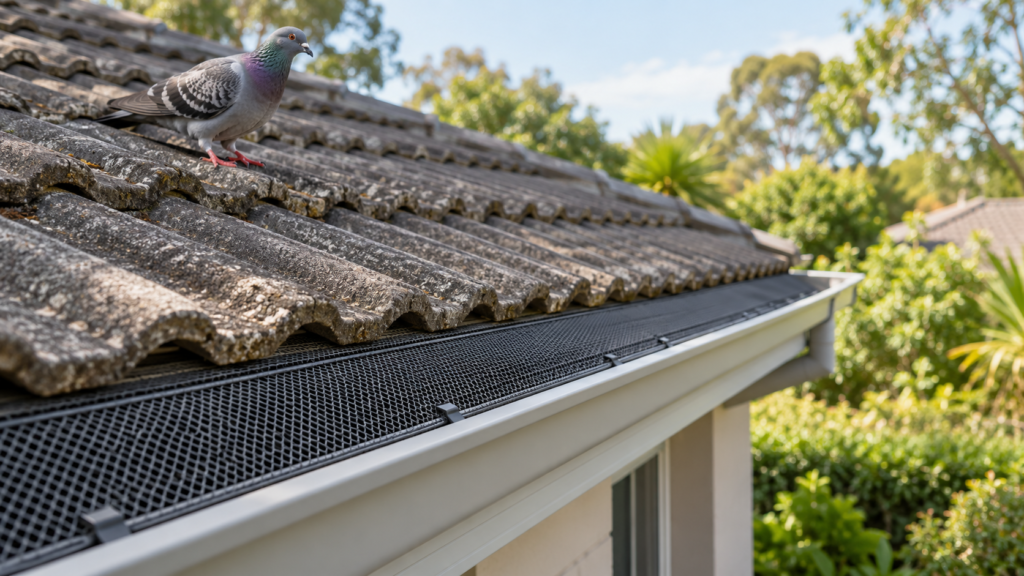
Birds repeatedly carrying twigs beneath roof edges can signal an access problem that calls for bird proofing rather than another gutter clean. The first step is identifying where they enter and which sheltered areas attract them. Properly fitted bird proofing mesh can create a physical barrier across suitable openings. Nearby trees also deserve attention because falling leaves add to the material collecting along the roofline. Where both problems occur, gutter leaf guards may form part of a broader maintenance plan, provided the installation addresses the property’s actual access points and drainage needs.
Finding the source of repeated activity
A bird resting on a roof does not necessarily indicate a nesting problem. Repeated trips into the same opening, particularly while carrying grass or twigs, provide a more useful reason to arrange an inspection. Homeowners can observe these movements from the ground and note the location for an installer.
The inspection should distinguish between material accumulating in an open gutter and birds entering a sheltered space beneath the roof covering. These situations may look similar from below, but covering the gutter alone may leave another entrance accessible.
Roof edges, corners and junctions deserve particular attention. A barrier across a straight section offers limited value if birds can move around its end. The assessment should also consider whether a damaged roof component needs repair before any protective system is fitted.
Photographs taken during the inspection can help explain the proposed work. They give homeowners a clearer view of the entry points and make it easier to understand why a quote includes particular sections.
Choosing a barrier that suits the roof
Mesh selection should begin with the roof’s construction and the purpose of the installation. Tile profiles, metal roofing and different gutter shapes create different fixing requirements. A product that suits one arrangement may need a different installation method on another.
The installer should explain how the barrier will attach, how its edges will be finished and which openings it will cover. Mesh size also needs consideration: the system must address the birds gaining access while remaining suitable for its position on the building.
Ventilation and drainage should remain part of that discussion. An installation should not simply fill every visible gap without considering what the opening does. Where the function of an opening is unclear, a roofing professional can assess it before work proceeds.
Homeowners should also ask about future access. Roofing repairs, gutter cleaning and inspections may still be necessary, so the proposed system should allow those tasks to be carried out without unnecessary dismantling.
Preparing the area before installation
Existing debris should be assessed before a barrier is fitted. Covering a gutter containing leaves and nesting material leaves the original obstruction underneath the new installation. Cleaning and checking the area first also gives the installer an opportunity to identify visible damage.
Birds should never be enclosed behind a newly fitted barrier. If an inspection finds an occupied nest, eggs or chicks, the contractor should pause that part of the work and seek appropriate advice before proceeding.
Preparation is also the time to separate exclusion work from roof repairs. A loose component or damaged gutter may require attention in its own right. Homeowners benefit from a quote that clearly identifies cleaning, repairs and barrier installation, rather than grouping everything under a vague promise to solve the problem.
Keeping the system effective over time
A protective installation should remain part of regular property maintenance. Homeowners can watch from ground level for debris collecting on top, visible lifting along the edges or renewed bird activity around the same area.
Checks are particularly useful after roofing work, when sections may have been moved to provide access. Any removed components should be refitted correctly, with joins and end sections checked before the job is finished.
Maintenance requirements should be discussed before installation. The contractor should explain what homeowners can observe safely, which tasks require professional access and how to report a suspected gap.
For properties with recurring nesting activity, a useful solution starts with a clear diagnosis. Identifying the entrance, preparing the area and fitting a suitable barrier gives homeowners a practical basis for managing the problem and planning future roof maintenance.